
Key takeaways
- The wrong baby wash is one of the most commonly overlooked eczema triggers. Even washes marketed as "gentle" or "mild" can contain fragrance, sulphates, or optical brighteners that flare sensitive skin.
- For eczema-prone skin, a wash should be soap-free, sulphate-free, fragrance-free, and free from optical brighteners and synthetic dyes.
- "Natural" is not a regulated term. A product can be labelled natural and still contain plant-based fragrances or essential oils that trigger contact reactions. Fragrance-free is the safer standard.
- Plant-based formulations with botanical actives such as aloe vera, calendula, and chamomile do not just avoid irritants. They actively support the skin barrier.
- Independent certifications from allergy specialists and ingredient safety bodies provide third-party verification that goes beyond brand claims.
Introduction
If you are managing your baby's eczema, you may already be tracking the diet carefully, keeping baths short, and switching to fragrance-free laundry, and still seeing flare-ups. The eczema baby wash is one of the last products parents think to change. In Malaysia, where popular international brands are widely available, it is easy to assume a global brand equals a safe one.
The wash used at every bath either protects the skin barrier or weakens it, and for eczema-prone skin, that difference compounds with every use. This guide explains what separates a genuinely safe eczema baby wash from one that looks gentle but is not, and what to look for when choosing one.
For the full baby eczema guide, read: Comprehensive Guide to Managing Baby Eczema Naturally.
Why conventional baby washes flare eczema?

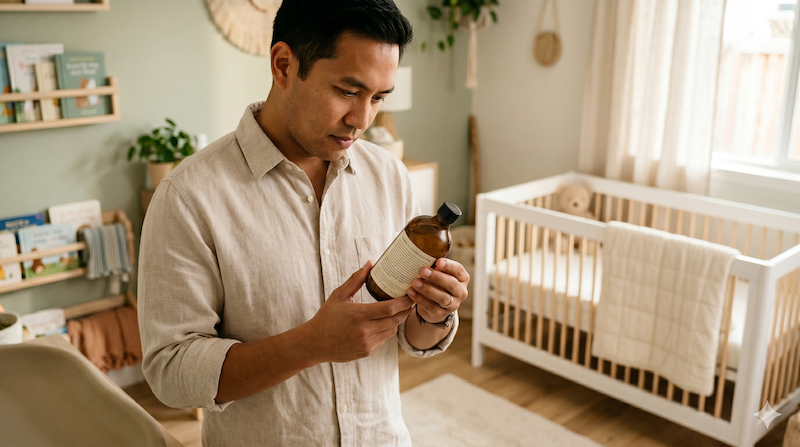
Parent carefully reading the ingredient label on a baby wash bottle.
Most conventional baby washes contain ingredients that trigger eczema flare-ups in sensitive skin, even products marketed as "gentle" or "mild."
An ingredient in a child's shampoo or wash can trigger an eczema flare hours or even days after use, making product selection a clinical priority, not just a preference.
The three most common risk ingredients to check for:
- Synthetic fragrance: The most common eczema trigger in baby skincare. Even trace amounts on eczema-prone skin cause inflammation that persists for days.
- SLS and SLES (sodium lauryl/laureth sulphate): Surfactants that strip the skin's protective oils at every wash, the opposite of what eczema-prone skin needs.
- Optical brighteners: Found in many conventional baby washes and laundry detergents, optical brighteners coat the wash surface and can remain in contact with eczema-prone skin long after rinsing.
For ingredients to avoid, read: The 3-Minute Rule for Eczema: How to Bathe and Moisturise Your Baby for Instant Relief.
What makes a baby wash safe for eczema-prone skin?

Fragrance-free baby wash with gentle botanical ingredients for eczema-prone skin.
A fragrance-free baby wash that is genuinely safe for eczema-prone skin meets a specific set of criteria, not just marketing claims.
The ingredient criteria
- Soap-free: Traditional soap has an alkaline pH that disrupts the skin's natural acid mantle, weakening the barrier. Eczema-prone skin needs a pH-balanced, soap-free cleanser.
- SLS (sodium lauryl sulphate)-free and surfactant-gentle: Look for plant-derived surfactants rather than synthetic ones. Synthetic surfactants like SLS create foam but strip the protective oils eczema-prone skin cannot afford to lose.
- Fragrance-free, not just unscented: Fragrance-free means no added fragrance at all. Unscented often means the fragrance has been masked with neutralising agents that can still irritate sensitive skin.
- Free from parabens, dyes, and optical brighteners: These additives serve cosmetic or commercial purposes and carry known irritation risk for eczema-prone skin.
- Formulated with skin-supportive botanicals: Plant-derived actives such as calendula and chamomile have documented soothing properties for inflamed, sensitive skin.
Why "fragrance-free" matters more than "natural"
"Natural" is not a regulated term. A product can be labelled natural and still contain essential oils, plant-based fragrances, or botanical extracts that trigger contact reactions on eczema-prone skin.
Fragrance, dyes, and essential oils are known potential contact allergens for babies with atopic dermatitis, and should be avoided in skincare products.
For eczema-prone skin, a baby wash without fragrance and with a clean, short ingredient list is a safer standard than one labelled natural with a long one.
Why plant-based formulations outperform conventional ones?
Beyond avoiding harmful ingredients, the choice of base ingredients matters. Where conventional washes rely on petroleum-derived surfactants and synthetic additives, plant-based formulations use botanical actives that actively support the skin barrier rather than stripping it.
- Plant-derived surfactants clean without stripping: Unlike petroleum-derived surfactants, plant-based alternatives cleanse gently while preserving the skin's natural moisture balance. For eczema-prone skin that already loses moisture faster than healthy skin, this distinction matters at every bath.
- Botanical actives actively support the barrier: Ingredients like aloe vera, calendula extract, and chamomile do not just avoid causing harm. They contribute anti-inflammatory and soothing properties that benefit compromised skin.
- Fewer ingredients mean fewer triggers: Conventional washes often include stabilisers, preservatives, and performance enhancers that extend shelf life or improve texture but add unnecessary contact points for eczema-prone skin. Plant-based formulas tend toward minimal, purposeful ingredient lists.
Offspring Gentle Head-To-Toe Wash is 97.9% natural origin, formulated with aloe vera, calendula, and chamomile, and free from synthetic fragrance, optical brighteners, and sulphates. It is dermatologist and paediatrician approved for eczema-prone skin from newborn.
Certifications that verify what labels cannot
Certifications from independent third-party organisations provide verification that goes beyond brand claims. They require ingredient review, safety testing, and allergen screening.
- EWG Verified: The Environmental Working Group (EWG) independently reviews formulations against a strict list of prohibited ingredients. EWG Verified products meet safety standards that go beyond regulatory minimums.
- Australian Allergy Certified: Independent testing by allergy specialists verifying the product is formulated to minimise allergic reaction risk. Particularly relevant for babies with eczema, who are more susceptible to contact allergies.
- Dermatest: A European dermatological testing institute that assesses products for skin compatibility and tolerability on sensitive skin.
When a wash carries multiple independent certifications, it signals that the safety claims have been verified, not just stated.
Offspring Gentle Head-To-Toe Wash holds EWG Verified and Australian Allergy Certified status, free from sulphates, parabens, synthetic fragrance, and optical brighteners. It is one of the few baby washes in Malaysia independently verified by multiple certification bodies.
Does daily washing help prevent eczema?

Parent gently bathing a baby as part of a daily eczema-friendly skincare routine.
Yes. Gentle daily washing with the right formulation is one of the most consistent ways to support eczema prevention in babies. Eczema hotspots include the cheeks, chin, elbow and knee creases, and skin folds, all areas exposed to the wash at every bath. This makes the choice of wash a daily skin barrier decision, not a one-time purchase.
In these same areas, saliva, drool, heat, and moisture accumulate between baths, adding to the irritant load on already-sensitive skin. A wash formulated for daily use removes these triggers without stripping the barrier eczema-prone skin struggles to maintain, making daily maintenance and prevention a realistic part of the routine.
A wash used at every bath is one of the highest-frequency contact products in a baby's routine. Its ingredient profile compounds over time in a way single-use products do not.
FAQs: Baby wash for eczema
What is the best baby wash for eczema?
Look for a wash that is soap-free, sulphate-free, fragrance-free, and free from optical brighteners and parabens. Formulations with botanical actives like aloe vera, calendula, and chamomile offer soothing benefits on top of avoiding irritants.
What ingredients should I avoid in baby wash for eczema?
The main ones to check for are synthetic fragrance, SLS and SLES, parabens, optical brighteners, and synthetic dyes. Essential oils and plant-based fragrances can also trigger reactions, so "natural" is not a reliable guide. Look for fragrance-free and check the ingredient list.
Is plant-based baby wash better for eczema?
Yes, generally. Plant-derived surfactants cleanse without stripping the skin's protective oils, which matters for eczema-prone skin that is already compromised. Botanical actives like aloe vera and calendula also contribute soothing properties that conventional synthetic washes do not offer.
How often should I wash a baby with eczema?
Yes, daily gentle washing is appropriate and recommended for babies with eczema. A soap-free, fragrance-free wash used consistently supports the skin barrier and helps clear the saliva, sweat, and environmental irritants that accumulate in eczema hotspots throughout the day.
Can the wrong baby wash trigger eczema?
Yes. Even washes marketed as gentle or mild can contain fragrance, SLS, or optical brighteners that trigger inflammation. Flare-ups can appear hours or even days after exposure, which is why product selection matters as much as any other part of eczema management.
Conclusion
The wash used at every bath either protects the skin barrier or compromises it, and for eczema-prone skin, that difference accumulates with every use. Plant-based, fragrance-free, soap-free formulations with independent certifications are the standard to look for, not a premium extra. Daily product choice is daily eczema prevention.
Explore Offspring's gentle bath and skincare range, kind to eczema-prone skin from newborn. For personalised guidance, get in touch with the Offspring team.


