
Key takeaways
- Most conventional nappy rash creams rely on zinc oxide or petroleum, which block moisture but do little to nourish or soothe irritated skin.
- "Natural" is not a regulated term. A product can be labelled natural and still contain fragrances or essential oils that irritate sensitive skin.
- Plant-based balms combine barrier protection with active nourishment from ingredients like calendula, olive oil, and jojoba oil.
- Independent certifications are the most reliable way to verify that a nappy rash cream is as safe as it claims to be.
- For sensitive or eczema-prone skin, the choice of nappy rash cream is a daily decision that compounds with every change.
Introduction
Standing in the pharmacy aisle or scrolling online, you are faced with rows of nappy rash creams that all promise to be gentle. It is hard to know which one is genuinely safe for your baby's skin. Most conventional nappy creams rely on the same base: zinc oxide and petroleum-derived ingredients that create a barrier but do little to nourish or soothe irritated skin.
This guide breaks down what conventional creams contain, what plant-based alternatives offer instead, and how to choose based on your baby's skin sensitivity.
For the basics on nappy rash, including how to recognise it and what triggers it, read: Nappy Rash (Diaper Rash): What is it, Symptoms, & Causes.
What conventional nappy rash creams contain

Parent checking the ingredient label on a baby nappy cream.
Most conventional nappy creams share a similar ingredient base. Understanding what each one does helps you make an informed choice.
- Zinc oxide: The most widely used active ingredient in conventional nappy creams. It creates a thick physical barrier between the skin and moisture, which is effective for blocking contact, but zinc oxide does not moisturise, soothe inflammation, or support skin repair.
- Petroleum jelly and mineral oil: Petroleum-derived ingredients that seal the skin surface to prevent moisture loss. They are occlusive, sitting on top of the skin without absorbing, and some parents prefer to avoid petroleum-derived ingredients on their baby's skin, particularly on broken or irritated areas.
- Synthetic fragrance and preservatives: Many conventional creams contain added fragrance, parabens, or other preservatives for shelf stability and scent. These additives serve no therapeutic purpose and carry an irritation risk for babies with sensitive or eczema-prone skin.
Conventional creams can work as barriers, but for parents looking for nourishment, soothing, and cleaner ingredient lists, plant-based formulations offer a different approach.
What makes a nappy rash cream safe for sensitive skin

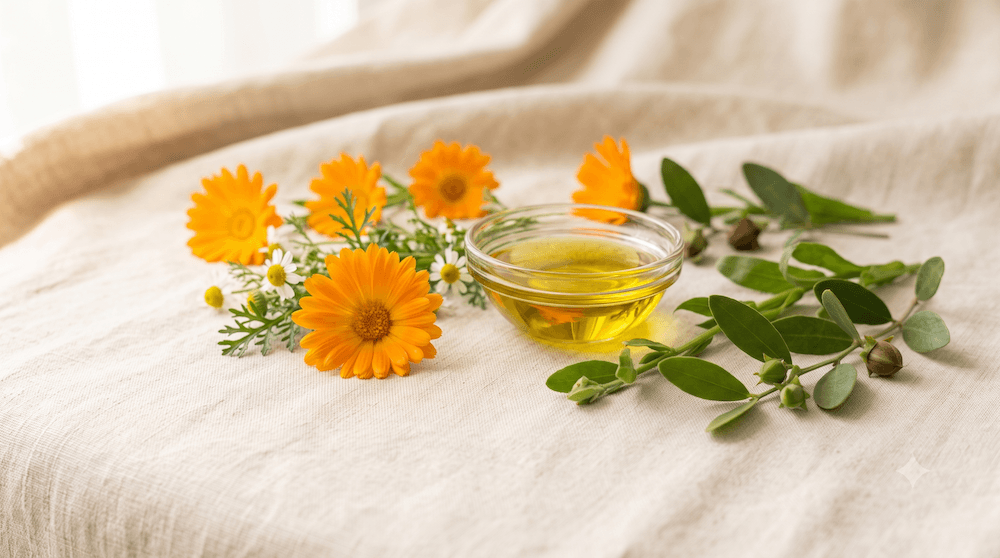
Close-up of calendula, chamomile, olive oil, and jojoba for sensitive baby skin.
A nappy rash cream that is genuinely safe for sensitive skin meets specific criteria beyond marketing words like "gentle" or "natural."
The ingredient criteria for sensitive skin
- Free from synthetic fragrance: Fragrance is the most common irritant in baby skincare. "Fragrance-free" is safer than "unscented," as unscented products can still contain masking agents.
- Free from parabens and phenoxyethanol: Preservatives associated with skin irritation. Look for naturally preserved formulas instead.
- Free from mineral oil and petroleum: Occlusive ingredients that block but do not nourish. Plant-based oils absorb into the skin and deliver nutrients while protecting.
- Formulated with skin-supportive botanicals: Ingredients such as calendula, chamomile, olive oil, and jojoba oil have documented soothing and anti-inflammatory properties for irritated skin.
- Dermatologist-tested: Independent testing confirms the product is safe for sensitive and eczema-prone skin, not just a brand claim.
Why "natural" does not always mean safe
"Natural" is not a regulated term. A product labelled natural can still contain essential oils or botanical extracts that irritate sensitive skin. The safer standard is a short, purposeful ingredient list with independent certification to verify the safety claims.
As of 2025, fragrance, dyes, and essential oils are known potential contact allergens for babies with atopic dermatitis and should be avoided in skincare products.
Plant-based vs conventional: How the ingredients compare

Conventional cream versus plant-based nappy balm.
The difference between plant-based and conventional nappy creams goes beyond the label. It is in what the ingredients actually do for your baby's skin. It is worth noting that "nappy cream" and "nappy balm" are often used to mean the same thing. The difference is the base: conventional creams are usually water and zinc based, while plant-based balms are made from oils and beeswax that both protect and nourish.
| Feature | Conventional creams (zinc or petroleum) | Plant-based balms |
|---|---|---|
| Barrier function | Zinc oxide or petroleum form a physical seal on the skin surface | Beeswax and plant oils form a protective layer while letting skin breathe and absorb nourishment |
| Hydration and soothing | Block moisture out, but do not actively hydrate or calm inflammation | Olive oil, jojoba oil, and calendula deliver fatty acids and anti-inflammatory soothing while protecting |
| Ingredient transparency | Often long ingredient lists with stabilisers, emulsifiers, and synthetic additives | Fewer, purposeful ingredients that are easier to understand |
For babies with sensitive or reactive skin, the combination of barrier protection and active nourishment from plant-based ingredients offers a more complete approach than barrier-only conventional creams.
Certifications that verify what labels cannot
Independent certifications go beyond brand claims. They require ingredient review, safety testing, and ongoing compliance.
- EWG Verified: The Environmental Working Group independently reviews formulations against a strict list of prohibited ingredients and contaminants. EWG Verified products meet safety standards that exceed regulatory minimums.
- Australian Allergy Certified: Independent allergen testing by allergy specialists, verifying the product is formulated to minimise the risk of an allergic reaction. Particularly relevant for babies with sensitive or eczema-prone skin.
- Made Safe: An independent certification confirming the product is made without a defined list of toxic chemicals known to harm human health. A meaningful benchmark for a product used daily on newborn skin.
A product carrying multiple independent certifications signals that its safety claims have been verified by third parties, not just stated by the brand.
Offspring Soothing Nappy Balm is made with 94.4% organic ingredients, olive fruit oil, beeswax, calendula, and jojoba oil, with 100% natural origin. It is EWG Verified, Australian Allergy Certified, and Made Safe certified, and dermatologist-tested for eczema-prone skin.
Is plant-based nappy balm safe for newborns?
Yes, provided the formulation is independently tested and certified. Newborn skin is thinner and more permeable than older baby skin, which makes ingredient safety even more important in the first weeks.
Look for products that are dermatologist-tested specifically for sensitive skin and carry independent allergen certifications, not just "suitable for newborns" written on the label. Offspring Soothing Nappy Balm is dermatologist-tested in Australia and suitable for babies of all ages from newborn.
For the full nappy rash toolkit, from cleansing sprays to barrier balms and breathable nappies, read: Best Tools for Baby Nappy Rash Rapid Relief.
FAQs: Nappy rash cream
What is the best nappy rash cream for sensitive skin?
The best nappy rash cream for sensitive skin is fragrance-free, free from parabens and petroleum, and formulated with soothing botanicals. Independent certifications such as EWG Verified and Australian Allergy Certified are the most reliable way to confirm it is genuinely gentle.
Can I use zinc oxide on my baby?
Yes, zinc oxide is generally considered safe for babies and is a common barrier ingredient. It blocks moisture effectively, but it does not nourish or soothe the skin, which is why some parents prefer a plant-based balm that does both.
What is the difference between nappy cream and nappy balm?
The terms are often used to mean the same thing, a product that protects the nappy area. The difference is the base: conventional creams are usually water and zinc based, while balms are made from oils and beeswax that protect and nourish at the same time.
What ingredients should I avoid in a nappy rash cream?
Avoid synthetic fragrance, parabens, phenoxyethanol, mineral oil, and petroleum. These add irritation risk without benefiting the skin, especially for babies who are sensitive or eczema-prone.
Is nappy cream suitable for eczema-prone skin?
Yes, provided it is fragrance-free and dermatologist-tested for sensitive skin. Plant-based balms with calendula, olive oil, and jojoba oil are generally well suited to eczema-prone skin, and independent allergen certification adds further reassurance.
What else can nappy cream be used for?
A gentle plant-based balm can also be used on dry skin, chapped lips, and other irritated areas beyond the nappy zone. Because it nourishes as well as protects, it works as a simple multi-use balm for the whole family.
Conclusion
Conventional nappy creams create a barrier, but plant-based formulations offer barrier protection plus active nourishment and soothing, in a cleaner and more transparent ingredient profile. For babies with sensitive or eczema-prone skin, the choice of nappy rash cream is a daily decision that compounds with every change. Independent certifications are the most reliable way to verify that a product is as safe as it claims to be.
Explore Offspring’s nappy cream range to find a plant-based option for your baby, and reach out to the Offspring team if you would like guidance on choosing the right product for your little one.


