
Key takeaways
- Nappy rash is one of the most common skin problems in babies, and it is not a reflection of how well you care for your little one.
- Friction from wiping, prolonged moisture, and harsh ingredients are the main things that make nappy rash worse.
- The most effective approach is a simple toolkit used together at every change: gentle cleaning, barrier protection, and the right nappy.
- These tools work best as a routine, not just during a flare. Prevention and treatment use the same steps.
- Most nappy rash clears within a few days, but some signs mean it is time to see a paediatrician.
Introduction
Your baby has nappy rash, also called diaper rash, and even with frequent changes the redness has not cleared. It is one of the most common reasons parents feel stuck, and it is easy to worry you are doing something wrong. You are not. Nappy rash is extremely common, it is not a reflection of how well you care for your baby, and with the right tools used together, most cases improve within a few days.
This guide covers what makes nappy rash worse, how to tell it apart from baby eczema, and the specific tools that provide rapid relief, from barrier balms to rinse-free sprays. The goal is a simple routine you can rely on at every change.
For a full overview of what nappy rash is, its symptoms, and causes, read: Nappy Rash (Diaper Rash): What is it, Symptoms, & Causes.
What makes nappy rash worse

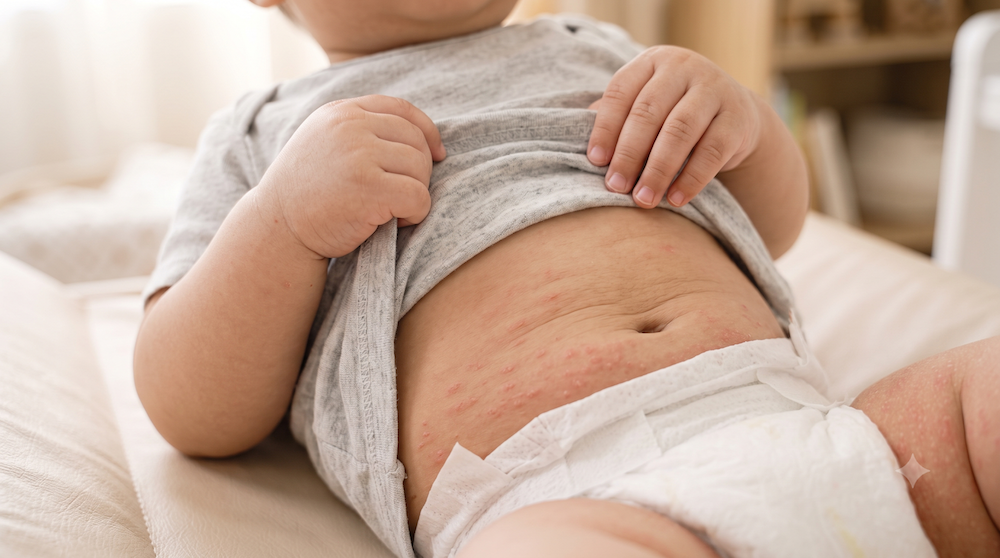
Baby's tummy showing red nappy rash around the nappy area.
Before choosing what to put on nappy rash, it helps to understand what keeps making it worse. Three factors do most of the damage.
- Friction from wiping: Rubbing irritated skin with wipes at every change adds friction that inflames the rash further. Patting or spraying is gentler on skin that is already broken.
- Prolonged moisture contact: A wet or soiled nappy left on too long keeps urine and stool against the skin, breaking down its natural barrier. Frequent changes are the first line of defence.
- Harsh product ingredients: Fragranced wipes, alcohol-based cleaners, and conventional creams with synthetic additives can irritate already-sensitive skin. Choosing fragrance-free, plant-based alternatives reduces the risk of further irritation.
The American Academy of Dermatology recommends gentle cleansing with fragrance-free, alcohol-free products and allowing the skin to air dry as part of first-line nappy rash management.
Nappy rash vs baby eczema: How to tell them apart

Side-by-side comparison of nappy rash and baby eczema on a baby.
Nappy rash and baby eczema can look similar, but they behave differently and need different care. The table below shows the main differences.
| Feature | Nappy rash | Baby eczema |
|---|---|---|
| Location | Stays in the nappy area | Cheeks, elbows, knees, and skin folds, rarely the nappy zone |
| Pattern | Develops quickly after moisture or irritation and clears with consistent care | Chronic and recurring, flaring in response to triggers |
| Texture | Usually smooth redness or raised spots. On darker skin tones it may look like darker patches rather than red, so texture and warmth are more reliable than colour | Dry, rough, scaly patches |
| Family history | No genetic link | Often runs in families with asthma or hay fever |
If you are unsure whether your baby has nappy rash or eczema, a paediatrician can confirm.
For a full guide to baby eczema, its symptoms, triggers, and management, read Baby Eczema: Symptoms, Treatment, Prevention.
The nappy rash toolkit: What to use and when

Flat lay of Baby Bum Cleansing Spray, Plant-Based Wipes, Soothing Nappy Balm, and FeatherAir Premium Diapers.
Managing nappy rash is not about one product. It is about using the right tools at the right moments. A complete toolkit covers three steps: gentle cleaning, barrier protection, and choosing the right nappy. Each one protects what the last one built.
Step 1: Gentle cleaning without friction
During active nappy rash, standard wiping can worsen irritation. A rinse-free cleansing spray reduces friction by loosening residue before you wipe, so the wipe lifts dirt away without dragging across sore skin. Spray onto the nappy area, allow a moment for it to work, then pat gently with a soft wipe.
Offspring Baby Bum Cleansing Spray is rinse-free and made with 86.4% organic ingredients including aloe vera, calendula, and chamomile, formulated without alcohol, sulphates, or synthetic fragrance. It is EWG Verified and Australian Allergy Certified.
Follow up with Offspring Plant-Based Wipes, made with 99% purified water on 100% biodegradable plant cellulose and free from 46 harsh chemicals.
Step 2: Barrier protection
After cleaning, a barrier balm creates a protective layer between the skin and the next nappy. This shields irritated skin from moisture, urine, and stool contact, giving the rash time to heal between changes. Apply a thin layer at every change, covering the entire nappy area, not just the red patches.
Offspring Soothing Nappy Balm is made with 94.4% organic ingredients, olive fruit oil, beeswax, calendula, and jojoba oil, dermatologist-tested and suitable for eczema-prone skin. It is EWG Verified and Australian Allergy Certified.
For a deeper look at why plant-based balm ingredients matter, read: Why Plant-Based Nappy Balm Protection Wins.
Step 3: Choosing the right nappy
The nappy itself matters. A breathable, absorbent nappy that keeps moisture away from the skin reduces the conditions that cause nappy rash in the first place. Three things make the difference.
- Breathability: A nappy with high air circulation reduces heat and moisture build-up against the skin.
- Chemical-free: Look for nappies free from chlorine, optical brighteners, dyes, and fragrances. These additives sit directly against sensitive skin.
- Fit: A snug but not tight fit reduces friction at the thighs and waist. Too loose and leaks increase moisture, too tight and friction worsens irritation.
Offspring FeatherAir Premium Diapers are free from chlorine, dyes, optical brighteners, and fragrances, ultra-thin at 1.5mm with 130X enhanced air circulation and a luxuriously soft topsheet. They are Dermatest certified and PETA Cruelty-Free.
How these nappy rash tools work together
The toolkit works as a system. The spray cleans without friction, the balm protects between changes, and the nappy keeps moisture away from the skin. Each step supports the others, and if you consistently miss one, the rash is slower to clear.
This routine applies at every nappy change, not just when the rash is visible. For nappy rash, prevention and treatment use the same steps.
For how to build this into a daily routine that stops nappy rash from recurring, read: How To Prevent Diaper Rash From Recurring.
When to see a paediatrician
Most nappy rash clears within a few days with consistent, gentle care. See your paediatrician if:
- The rash does not improve after 3 to 5 days of consistent home care.
- The rash is spreading, severe, or unusual in appearance.
- There are signs of infection, such as pus, blisters, bleeding, or fever.
- The rash causes significant pain during nappy changes or urination.
- You suspect a fungal infection. Look for bright red patches with raised edges or satellite spots outside the main rash area.
Trust your instincts. If something does not look right, it is always worth having it checked.
FAQs: Nappy rash tools
What is the best thing to put on nappy rash?
A fragrance-free barrier balm is the most effective thing to put on nappy rash, applied at every change to protect the skin while it heals. For irritated skin, pair it with rinse-free cleaning to reduce friction.
Should I use cream or spray for nappy rash?
Use both, as they do different jobs. A rinse-free spray cleans the area with less friction, and a barrier balm then seals and protects the skin until the next change.
How often should I apply nappy balm?
Apply a thin layer at every nappy change, not only when the rash is visible. Consistent barrier protection is what gives the skin time to recover.
Can I use nappy balm on eczema-prone skin?
Yes, provided the balm is fragrance-free and dermatologist-tested for sensitive skin. Plant-based balms with ingredients like calendula and jojoba are generally well-suited to eczema-prone skin.
How do I know if my baby's nappy rash is fungal?
A fungal rash often looks bright red with raised edges and small satellite spots outside the main patch, and it tends not to clear with a standard barrier balm. If you notice these signs, a paediatrician can confirm and recommend the right treatment.
How long does nappy rash take to heal?
Most nappy rash improves within 3 to 5 days once you clean gently, protect with a barrier balm, and keep the area dry. If it has not improved after that, it is worth seeing a paediatrician.
Conclusion
Nappy rash is common, manageable, and responds well to consistent, gentle care with the right tools. Gentle cleaning, barrier protection, and a breathable nappy work together at every change to soothe irritated skin and keep it protected. Choosing products that are dermatologist-tested, plant-based, and free from harsh chemicals gives your baby's skin the best chance to heal and stay comfortable.
Explore Offspring's gentle bath and skincare range to build your baby's nappy rash toolkit, and reach out to the Offspring team if you would like guidance on choosing the right products for your little one.


