
Key takeaways
- Swaddling a baby mimics the security of the womb, reduces the Moro (startle) reflex, and helps newborns settle into longer, calmer sleep.
- Swaddling is safe when done correctly, as long as the legs are kept loose in a frog-leg position to protect hip development.
- In Malaysia's warm and humid climate, breathable, lightweight muslin is the best swaddle material.
- Most babies can be safely swaddled from birth until around 2 to 4 months, stopping the moment they start to roll and transitioning gradually with one arm out first.
- Swaddle primarily for sleep rather than around the clock, giving your baby room to move freely during wakeful periods.
Introduction
Swaddling is one of the very first skills you will learn as a new parent, and it is one that makes a real difference in those early weeks. That familiar snug wrap (arms in, baby calm, everyone finally breathing) has been soothing newborns for generations.
This article covers everything you need to know about swaddling your baby: what it is, why it helps, how to do it safely, when to use it, and what to look for if you are raising a little one in Malaysia's climate.
What is swaddling?

Image: Parent swaddling a newborn in a white muslin cloth on a changing mat.
Swaddling a baby means wrapping your newborn snugly in a blanket or cloth, keeping them close and calm in those first unsettled weeks. It mimics the closeness and containment of the womb, which is all your baby has ever known up until now. In Malaysia, many families are familiar with bedung, the traditional practice of wrapping a newborn tightly in cloth. Modern swaddling is built on that same instinct, just with updated safety guidance to keep it as gentle as possible.
Benefits of swaddling a newborn

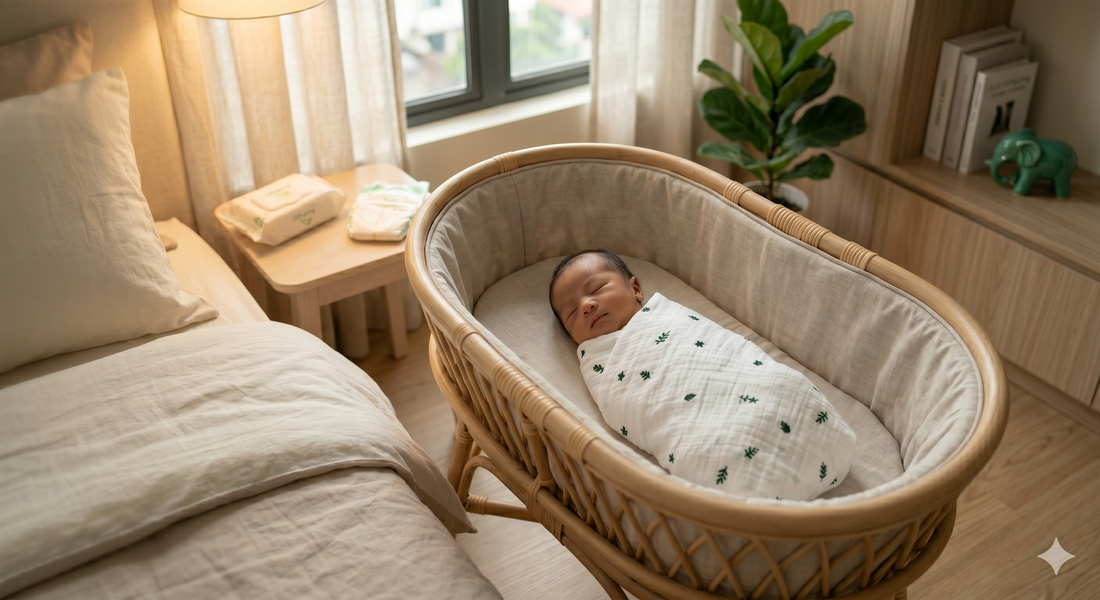
Image: Swaddled newborn sleeping peacefully in a bassinet.
Swaddling can help many newborns feel calmer and more settled:
- It mimics the snug feeling of the womb, which is deeply calming for a newborn adjusting to the outside world.
- It reduces the Moro reflex (the involuntary startle that wakes babies suddenly), supporting longer, more settled sleep.
- It soothes fussiness, particularly during the evenings when newborns are most unsettled.
- It helps babies feel secure during nappy changes or when being put down to sleep independently.
Is swaddling safe?
Yes, swaddling is safe when done correctly. The risk comes from incorrect technique, so it is worth taking a few minutes to learn the right method from the start. When done safely, swaddling can be an effective technique for calming newborns and supporting sleep.
Swaddling and hip dysplasia
Wrapping a baby's legs too tightly in a straight position can affect healthy hip development. Your baby's legs must be loose enough to bend up and out naturally in a frog-leg position. Never wrap the legs straight and tight, and do not use weighted swaddles at any age.
Overheating in Malaysia's climate
Malaysia is hot and humid year-round, making overheating a real risk for swaddled babies. Dress your baby in one light layer underneath, such as a cotton onesie, and always choose the lightest swaddle fabric you can find.
Keep an eye out for signs of overheating, including sweating, damp hair, flushed cheeks, heat rash, and faster-than-usual breathing. Keep the room as cool as possible, ideally with a fan circulating air. If your home has air conditioning, set it to a comfortable level for a lightly clothed adult.
When to stop using a baby swaddle
Switch out of swaddling the moment your baby starts to roll, typically between 2 and 4 months. A swaddled rolling baby is a safety risk. Transition gradually: start with one arm out for a few nights, then both arms out, before removing the swaddle entirely. Never swaddle a baby who is attempting to roll.
When to swaddle: Signs your baby needs it
When to swaddle is easiest to read from your baby's own cues. Swaddling works best in the newborn stage, from birth to around 2 to 4 months, and is particularly helpful if you notice:
- Frequent startling awake from the Moro reflex during sleep
- Difficulty settling or calming after feeds
- Waking repeatedly due to their own arm movements
- General fussiness, especially in the evenings
You do not need to swaddle around the clock. Many parents use it primarily for sleep and loosen it during alert, wakeful periods to give their baby room to move freely, which also supports healthy motor development.
How to swaddle a baby

Image: Parent demonstrating swaddling on a newborn baby.
The classic square fold method is the most reliable. Here is how to wrap a baby in a swaddle, step by step:
- Lay a square blanket flat and fold the top corner down roughly 15cm.
- Place your baby on their back with their neck resting at the folded edge.
- Take the left edge of the blanket over your baby's body and tuck it beneath them.
- Fold the bottom corner up toward your baby's chest, leaving plenty of room for the legs to bend naturally.
- Take the right side across and tuck it underneath your baby's back.
- To check the fit, slide two fingers between the blanket and your baby's chest. If your fingers fit, the wrap is snug but safe. The hips and legs must have room to move freely in a frog-leg position.
Arms in or arms out? Most newborns prefer arms in for the first few weeks, as it best reduces the startle reflex. As your baby grows and the reflex settles, one arm out is a natural and gentle next step before transitioning fully.
Types of swaddles and materials

Image: Different baby swaddles and breathable materials displayed on a soft surface.
The type of wrap and material you choose can make a real difference, particularly in Malaysia's climate.
Types of swaddle wraps
- Arms-in wraps: Classic full swaddle, best for newborns with a strong Moro reflex.
- One arm out: A good option as your baby starts easing out of swaddling, or for babies who resist being fully wrapped.
- Arms out: Useful as your baby approaches the rolling stage and you are beginning to wean off swaddling.
- Zip or velcro swaddles: Quick and easy to use, especially during night changes. A practical option for exhausted parents.
- Blanket wraps: Traditional and versatile, but require a little practice to get the fit right without being too tight.
Best materials for swaddling in Malaysia's climate
In Malaysia's heat and humidity, muslin is the clear first choice. Muslin is breathable, gentle on skin, and gets softer with every wash. Look for 100% cotton or bamboo-cotton muslin. Avoid thick fleece or padded swaddle blankets, which trap heat and raise your baby's temperature quickly. Before buying, check the label for "breathable", "lightweight", or "muslin" and feel the fabric yourself.
For what to pack for baby's going-home essentials, read Hospital Bag Checklist (Part 2): Baby and Dad.
FAQs: Swaddling a baby
Can I swaddle a newborn?
Yes. Swaddling is designed for newborns and is most effective in the first few weeks of life, when the Moro reflex is at its strongest, and your baby is still adjusting to life outside the womb.
How long can a baby stay swaddled?
Most babies are swaddled mainly during sleep in the newborn stage. Once your baby begins trying to roll, usually around 2 to 4 months, it is time to stop swaddling.
What should I do if my baby hates being swaddled?
Some babies resist swaddling, and that is completely normal. Try swaddling with one arm out, use a softer fabric, or try a zip swaddle for a more consistent and secure fit. If your baby consistently dislikes it, you do not have to swaddle. Follow your baby's lead.
Should I swaddle my baby with arms in or arms out?
For newborns with a strong Moro reflex, arms in is usually more effective at keeping them settled. As your baby grows and the reflex eases, arms out is a natural progression. There is no single right answer. Observe your baby and adjust as they develop.
How long should I swaddle my baby per day?
There is no fixed daily limit. During wakeful, alert periods, give your baby room to move freely and let your little one explore their surroundings.
Conclusion
Swaddling your baby takes a little practice, but it quickly becomes second nature. Done correctly, it is one of the most effective tools you have for settling a newborn in those precious first weeks. Start with a lightweight muslin, follow the two-finger rule, keep those little legs loose, and stop as soon as you see signs of rolling. You have got this. It gets easier every time.
For gentle, certified-safe products to support your baby's earliest days, explore the full Offspring range. For personalised guidance, get in touch with the Offspring team.


