
Key takeaways
- Most baby wipes are tested for skin safety, not oral safety. There is a difference.
- Wipes reach your baby's mouth in two ways: when they suck their hands after being wiped, and when you wipe around the mouth after feeding.
- Common wipe ingredients like phenoxyethanol, fragrance, alcohol, and synthetic surfactants are safe on skin but not meant to be swallowed.
- Oral toxicity tested is a specific certification that confirms a wipe is safe for contact with the mouth, teeth, and gums. Most wipes do not carry it.
- Choosing a wipe that has been independently tested for oral safety removes the guesswork for parents.
Introduction
Most baby wipes are not tested for oral safety, but some are. You wipe your baby's hands, and within seconds those fingers are in the mouth. Every parent has watched it happen. What is on the wipe matters because whatever is on the skin can end up being swallowed. Most parents have never thought to check whether their wipes are oral safe, and this guide explains what that means and what to look for.
Why oral safety matters for baby wipes

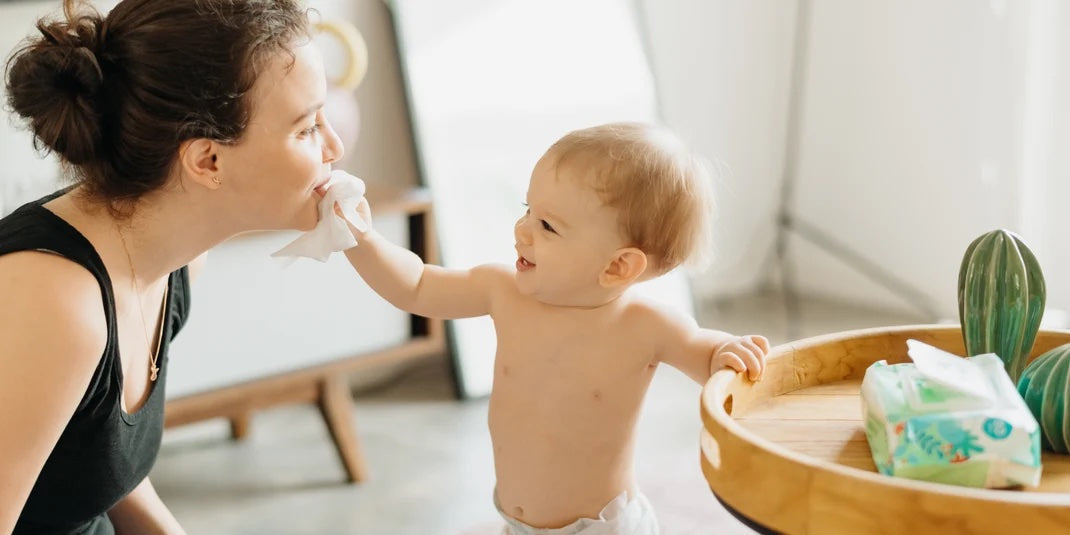
Baby wiping mother's mouth with an Offspring Plant-Based Wipe.
Baby wipes are designed for skin, but your baby's skin is not where the wipe formula always stays.
- When your baby sucks their hands after being wiped. Babies suck their fingers, chew their fists, and put their hands in their mouths constantly, especially in the first 12 months. If the wipe you used on those hands contains ingredients not meant to be swallowed, traces of those ingredients travel from skin to mouth at every change. In hot, humid climates, where sticky hands from humidity need more frequent wiping, the number of transfers adds up quickly.
- When you wipe around the mouth after feeding. Many parents use wipes to clean around the mouth, chin, and cheeks after feeding. If the wipe is not tested for oral contact, the formula can come into direct contact with the lips, gums, and tongue.
For newborns, whose immune and digestive systems are still developing, the concern is not whether they will put their hands in their mouths. It is what is on those hands when they do.
What wipe ingredients are harmful if swallowed?

Ingredient label on a standard baby wipe packet highlighting preservatives and fragrance.
Most standard wipes contain ingredients that are safe on the skin but not meant to be swallowed.
- Phenoxyethanol. A common preservative in baby wipes. It is considered safe on the skin, but it should not be used around the mouth area and is not suitable for newborns to swallow.
- Fragrance and masking agents. Added fragrance serves no cleaning purpose. When swallowed through your baby's hand-to-mouth habit, fragrance chemicals add unnecessary chemical exposure to your baby's system.
- Alcohol-based ingredients. Some wipes contain alcohol-based preservatives or cleaning agents. Alcohol is a known irritant to the mouth and gums and should not come into contact with a baby's mouth.
- Synthetic surfactants (SLS/SLES). Used to boost cleaning power, these foaming agents can irritate the mouth and gums and are not meant to be swallowed.
None of these ingredients are necessary for effective cleaning. Safer alternatives exist that clean just as well without them.
What does oral toxicity tested mean?
"Oral toxicity tested" is a specific certification. Here is what it involves and why it matters.
- What the test is. Oral toxicity testing checks whether a product's formula is safe if it comes into contact with the mouth, gums, and teeth. The testing is done at an independent laboratory, not by the brand itself.
- What it confirms. A wipe that passes oral toxicity testing has been certified safe for cleaning a baby's mouth, teeth, and gums, not just the skin. This goes beyond standard dermatological testing, which only covers external skin contact.
- Why most wipes do not have it. Oral toxicity testing is not a standard requirement for baby wipes. Most brands test for skin safety only. A wipe carrying this certification has voluntarily gone further than the industry standard. Using wipes tested for oral contact is the safer choice when cleaning around a baby's mouth, gums, or hands.
When choosing wipes for a baby who puts everything in their mouth, this certification is the most direct proof that the product has been verified safe for oral contact.
How to choose wipes that are safe for your baby's mouth

Offspring Plant-Based Wipes, 99% water and independently certified safe.
Not every wipe labelled "gentle" or "safe for face and hands" has been tested for oral use. Here is how to check.
- Look for oral toxicity tested on the label. This is the only certification that specifically confirms the wipe is safe for mouth, teeth, and gum contact.
- Check the formula is 99% purified water. A simpler formula means fewer ingredients that could be harmful if swallowed. Botanical ingredients like aloe vera, chamomile, and calendula add gentle care without adding chemical risk.
- Confirm the wipe is free from fragrance, alcohol, parabens, and phenoxyethanol. These are the most common ingredients that are safe on skin but not safe for oral contact.
- Check for independent allergy certification. Australian Allergy Certified, EWG Verified, and Dermatest certifications confirm the wipe has been independently tested for safety, not just marketed as safe.
For a broader comparison of plant-based and standard wipes, read: Plant-Based Wipes vs Standard Wipes: Which Are Best for Newborn Skin Health?
Offspring Plant-Based Wipes meet all four of these criteria. They are oral toxicity tested and certified safe for cleaning baby's mouth, teeth, and gums. They are made with 99% purified water on 100% biodegradable plant cellulose from Austria, free from 46 nasties, and independently certified by Australian Allergy, EWG, Dermatest, Made Safe, and Australian Toxin-Free.
When does a wipe reaction need medical attention?
Accidentally swallowing small traces from a baby wipe during normal hand-to-mouth behaviour is common and usually not harmful. See your paediatrician if:
- Your baby shows signs of irritation around the mouth, tongue, or gums after being wiped.
- There is persistent redness, swelling, or discomfort in the mouth area.
- Your baby vomits, has diarrhoea, or seems unwell after mouthing a wipe.
- You suspect an allergic reaction: hives, swelling, or difficulty breathing.
If you are unsure whether your current wipes are safe for your baby's mouth, switching to a wipe that has been tested and certified for oral use removes the guesswork entirely.
FAQs: Are wet wipes oral safe?
Are all baby wipes safe for the mouth?
No. Most baby wipes are tested for skin safety only. Unless the wipe is specifically labelled oral toxicity tested, it has not been verified safe for contact with the mouth, teeth, or gums.
Should I rinse my baby's hands after using wipes?
If the wipe is oral toxicity tested, rinsing is not necessary. If you are unsure whether your wipe has been tested for oral contact, rinsing and drying your baby's hands before they go into the mouth reduces any residue.
Are fragrance-free wipes automatically safe for oral use?
No. Fragrance-free is a good starting point, but it does not mean the wipe has been tested for oral safety. A wipe can be fragrance-free and still contain phenoxyethanol, synthetic surfactants, or other ingredients not safe for the mouth.
What should I do if my baby chews on a wipe?
Remove the wipe from your baby's mouth, check for any torn pieces, and rinse the mouth gently with water. If your baby shows signs of discomfort, vomiting, or an allergic reaction, contact your paediatrician.
Can I use baby wipes to clean my baby's gums before teeth come through?
Yes, if the wipe is oral toxicity tested and certified safe for mouth, teeth, and gum cleaning. Cleaning your baby's gums from the first few days after birth helps establish a gentle oral hygiene routine.
Conclusion
Most baby wipes are tested for skin safety but not for oral contact. For babies who put their hands in their mouths after every wipe, choosing a wipe that has been independently tested for oral safety removes the risk of accidentally swallowing harmful ingredients. The safest wipes combine a 99% water formula, plant-based cloth, and independent certifications that cover both skin and oral contact.
Explore Offspring's plant-based wipes range to find wipes that are safe for your baby's skin and mouth. Wipes are available from 10 sheets for parents who want to try before committing to a larger pack.


